
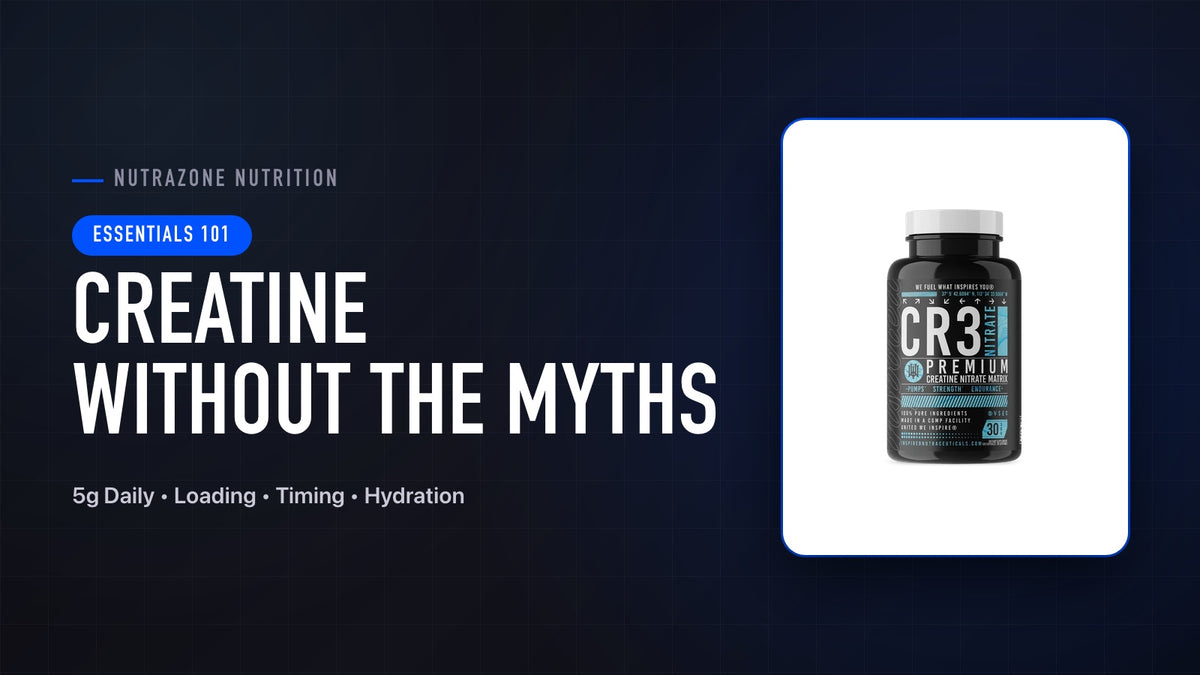
If you only buy one performance supplement all year, make it creatine monohydrate. It has decades of human research behind it, costs pennies per serving, and supports strength output, training volume, lean muscle retention, and even cognitive performance under fatigue.
How Much Should You Take?
5 grams once a day, every day (including rest days). Larger lifters over 220 lbs can bump up to 7 to 10 grams daily, while smaller athletes do fine on 3 to 5 grams. Consistency beats everything because creatine works by keeping your muscle stores saturated over time.
Do You Need a Loading Phase?
No. Taking 20 grams per day for 5 to 7 days saturates your muscles a couple weeks faster, which is useful if you have a meet or event right around the corner, but it also causes stomach discomfort for a lot of people. Taking 5 grams daily reaches full saturation in about 3 to 4 weeks with zero hassle.
Does Timing Matter?
Not much. Take it whenever you will not forget: mixed into your pre-workout, your post-workout protein shake, or morning electrolytes. Pairing it with a meal or carb source can help absorption slightly, but taking it daily matters ten times more than the exact minute on the clock.
3 Creatine Myths Worth Ignoring
- "Creatine makes you bloated." Creatine pulls water inside the muscle cell (which makes muscles look fuller and perform better), not under the skin. If a cheap powder upsets your stomach, switch to a micronized monohydrate or split into two smaller doses.
- "You have to cycle off it." There is no evidence healthy adults need to cycle off standard daily creatine monohydrate.
- "Fancy designer forms beat monohydrate." Monohydrate remains the gold standard for both effectiveness and price per serving.
Keep your hydration solid (aim for an extra glass or two of water per day) and stay consistent for 30 days. Shop Creatine at NutraZone Nutrition.


Share:
High-Stim vs. Daily Driver vs. Stim-Free Pre-Workout: How to Pick the Right One
Whey Isolate vs. Whey Blend vs. Plant Protein: Which One Fits Your Goal?